


 marketing@expomax.com.cn


Complete Guide to Buying Custom RGB LED Exhibition Display Systems
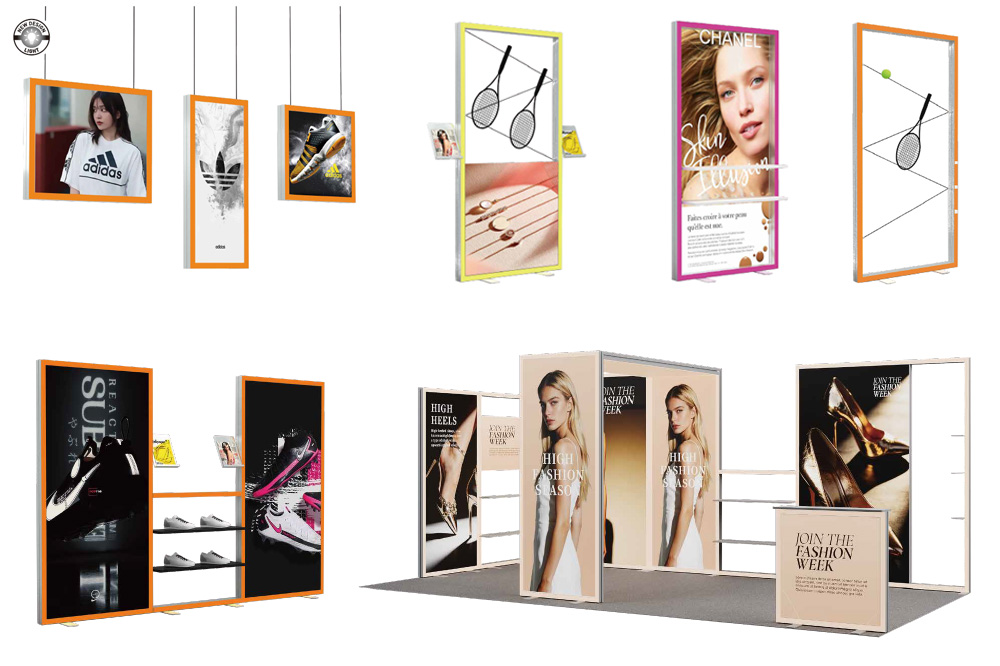
Buying a custom RGB LED exhibition display is more than just picking a screen. First, you need to check your booth size and how far people will view it from. Then, compare how well different technologies perform in lighting. Finally, check manufacturers for quality and support.
Every exhibition has its own challenges. Your screen must grab attention but still fit your rental space. A dynamic RGB system can make your booth stand out as a visual anchor. But you need the right content and setup to make it work. Also, think about rental costs for extra equipment.
Installation needs and ongoing costs matter too. Modular designs give you flexibility for future events. The best exhibition LED display balances brightness, durability, and ease of use. This guide helps you make smart choices that get the most from your investment.
Key Takeaways
Measure your booth and viewing distance to choose the correct screen size and pixel pitch.
Pick a screen that lets you change how bright it is and what colors it shows, so you can look great no matter the light.
Choose a modular frame that you can put together without tools. This saves time and cuts costs over the long run.
Check the maker's quality certificates and help after the sale before you buy.
Look at the full cost of owning the system, including hidden fees and warranty details, not just the starting price.
Assessing Your Exhibition Display Needs
Before buying a custom RGB LED exhibition display, you need to check your needs. Your booth size and how people move around decide the screen size. What you want to show and where you are affect lighting and graphics. Careful planning saves time and rental costs.
Determining Optimal Size and Viewing Distance
Start with your booth size. A 10x10 booth needs a different screen than a 20x20 booth. Where your booth is on the floor also changes how people walk. People in North America and Europe walk counterclockwise. Put your main display on the side that faces their walking path. Don't put important displays where crowds get stuck.
How far away people stand decides the pixel pitch. This is a key spec for any exhibition LED display. For a viewing range of 3 to 8 meters, you need a P2.0 to P2.6 screen. The closest viewing distance in meters equals the pixel pitch in millimeters. For best sharpness, multiply the pixel pitch by three. This makes your content look clear and professional. Picking the right exhibition LED display starts with these measurements.
Pixel Pitch | Minimum Viewing Distance | Comfortable Viewing Range |
|---|---|---|
P2.0 - P2.6 | 2.0 - 2.6 m | 3 - 8 m |
P2.9 - P3.9 | 2.9 - 3.9 m | 5 - 15 m |
Defining Application and Environment
Why you are using the display sets your content and lighting. A product launch needs bright colors and moving effects. Your content must fit the campaign theme. You can change SEG fabric graphics easily for each event.
The lighting in the hall changes how bright your screen needs to be. Indoor halls have lights you can control.
In indoor halls with controllable lighting, the best brightness for LED displays is 800 to 1,500 nits. This low brightness gives clear images and no glare, making it comfortable to watch for a long time.
Picking a modular light box booth saves you money overall. You can use the same frame for many shows. This cuts down on rental costs for custom setups. A modular system lets you change the screen size for different booths. This flexibility lowers the cost of renting special hardware for each event. You don't have to pay for a new screen each time.
Evaluating RGB LED Lighting Performance
Understanding Brightness and Color Vibrancy
The biggest plus of RGB LED tech is that it can shift colors on the fly. Static lightboxes only give you one fixed look. An RGB LED exhibition display lets you swap colors to fit different campaign themes. This makes your booth more interesting. You can set your screen to show brand colors exactly. This helps people remember your brand during any show.
Brightness matters a lot for how your content looks. For indoor exhibition LED displays, you need the right brightness to fight ambient light. In halls or rooms where you control the light, 600 to 800 nits works well. This range gives clear images without hurting quality. For normal indoor exhibition spaces with typical light, 800 to 1,200 nits is best. These levels keep your content visible and bright. You can change brightness settings based on the hall. This makes an exhibition LED display a strong tool for any event.
Color vibrancy comes from the quality of the LEDs. Good LEDs produce rich, full colors that catch the eye. Products like EXPOMAX's RGB Frame System offer custom lighting effects. You can build unique moods that fit your marketing goals. The system has dual lighting modes for extra visual punch. You can also set up dynamic rgb lighting sequences. These sequences change over time. This keeps your booth feeling new all day.
Ensuring Lighting Uniformity and Control
Even lighting is key for a professional look. Uneven lighting causes dark spots or bright patches. These issues distract viewers. Industry groups like the American Association of Physicists in Medicine (AAPM) Task Group 18, the International Electrotechnical Commission (IEC), and the Video Electronics Standards Association (VESA) set testing rules for backlight uniformity. These rules say that luminance deviation at any screen point must not go over 15% to 20% of the center luminance. This keeps your content looking steady across the whole display.
For an LED display for exhibitions, uniformity is even more important. Your content has text, images, and graphics. These need even light. Uneven lighting can hide key details. It can also make your booth look sloppy. A quality system keeps brightness steady across the whole surface. This helps your brand message look clear and neat. An event LED screen needs this quality for professional results.
Control systems let you fine-tune lighting effects. You can set sequences that fade colors slowly. You can also switch colors in a flash. You can match lighting to music. You can match lighting to on-screen content. This control helps you build immersive experiences. For example, use a slow color fade during a product talk. Use quick color changes to highlight a deal. The RGB Frame System from EXPOMAX has advanced control features. You can tailor lighting effects to your event theme. The tech supports backlit illumination. It also supports RGB color-changing light columns. Together, these create a stunning look. This look pulls in attendees.
Good control also means you can adjust lighting from afar. You can change colors without touching the display. You can change brightness without touching the display. This saves time during setup and teardown. Every RGB LED exhibition display gains from this flexibility. An event LED screen needs this to work well in different spaces. LED video walls need similar control for steady results across many panels.
Comparing Lighting Technologies for Displays
Weighing Edge-Lit vs. Backlit Systems
Two main lighting types are used for illuminated displays: edge-lit and backlit (direct-lit). Each type changes how your content looks and how much power your display uses. Knowing these differences helps you pick the right screen for your next show.
Edge-lit systems put LEDs along the frame edges. Light spreads inward through a diffusion panel. This design allows very thin frames, sometimes as slim as 60–120 mm. Fewer LEDs mean edge-lit displays use less power, especially at lower brightness. They also produce less heat, which is good for portable setups. However, getting even light across a big surface may need extra optical parts.
Backlit systems place LEDs directly behind the graphic panel. This setup supports a thickness of 30–120 mm and gives brighter, more even light. Direct-lit displays often use more power because they have more LEDs. They also get warmer, especially at high brightness. For an exhibition LED display where vivid colors matter most, backlit technology offers better brightness and color control.
Performance Factor | Edge-Lit Backlight | Direct-Lit Backlight |
|---|---|---|
Power use | Often lower | Often higher |
Thickness | Ultra-thin (60–120 mm) | Standard (30–120 mm) |
Brightness uniformity | Needs diffusion optics | Naturally uniform |
Heat generation | Lower | Higher |
Exploring Hybrid and Pixel-Controlled Options
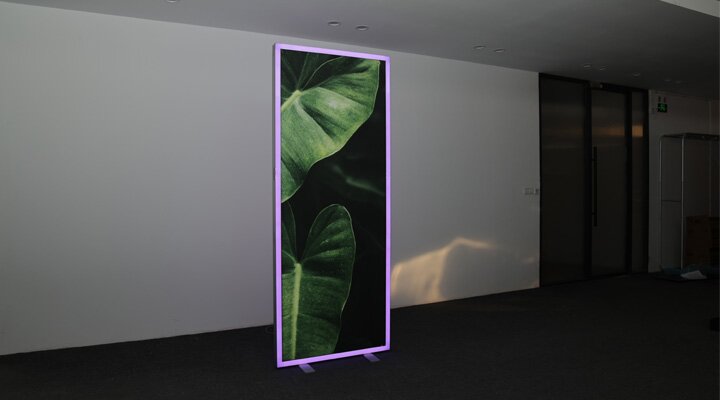
You do not have to pick just one type. Hybrid systems combine both methods for the best visual effect. The RGB LED Edge Frame Lightbox, for example, pairs RGB color-changing light columns with backlit illumination. This dual lighting system creates a glowing billboard look that stops people in busy aisles.
Self-illumination helps in dim convention centers. Your display no longer depends on overhead lights. Backlighting boosts color vibrancy and contrast, making product photos look richer and more detailed. The glow improves aisle visibility and creates a premium brand feel. These benefits matter at any show where you compete for attention.
Pixel-controlled options take customization further. Individual LED segments can change color on their own, allowing dynamic sequences across your screen. You can program waves, pulses, or brand-specific color shifts. This technology works well for LED video walls and large displays. The modular design of systems like EXPOMAX's RGB Frame System lets you change lighting effects for each event. You can match your screen's mood to your campaign theme without buying new hardware.
For most exhibitors, a hybrid approach gives the best balance. You get energy savings from edge-lit parts and visual impact from backlit light. The RGB control system lets you adapt quickly. Your display stays reusable across many shows, cutting long-term costs. Choose a system that supports both lighting modes, and you gain flexibility that static lightboxes cannot offer.
Checking Graphic Quality and SEG Materials
Your graphics show your message. They need to look clear and professional. Silicone Edge Graphics (SEG) give sharp, high-quality images. This is important for professional displays. The fabric goes around an aluminum frame. A silicone strip fits into a channel. This makes a smooth, tight surface with no wrinkles or bubbles. Your content looks clean and polished. That is exactly what you need for a custom seg lightbox.
Selecting the Right SEG Fabric
The fabric you pick changes how your graphics look when lit. Different materials have different benefits. Polyester fabric is the standard choice. It spreads light evenly and stops hot spots. Knit fabrics are flexible and do not wrinkle easily. They are great for portable displays. Woven fabrics have a tight weave. They keep shape and give sharp images. Backlit film gives high contrast and brightness. But it is not as flexible as fabric.
For most exhibition displays, polyester fabric is best. It balances strength, color, and light spread. Stretch fabric is another good choice. It fits tightly over the frame and reduces wrinkles. If you care about the environment, recycled fabric works well without losing quality. Each material has a use. So pick the fabric that fits your needs.
Light transmission also matters. Nano-coated polyester is used as the graphic layer in a three-layer SEG backlit setup. It lets 92% of light through. This high rate means your backlight shines through well. Your graphics stay bright and colorful. The silicone edge system works with an LED backlight module to finish the setup. This combination makes sure your display works its best.
Verifying Print Resolution and Color Accuracy
Print resolution decides how sharp your graphics look from far away. For large displays, you can use lower resolution files. Fabrics have a slight dot gain that helps hide low resolution. A file printed at 75ppi works well for a mural-sized graphic. You might even go as low as 50ppi, depending on the content. This flexibility saves file size without losing visible quality.
Color accuracy is another key factor. The RGB LED output affects how your printed colors look. Ask your manufacturer for a print proof before production. This proof shows you exactly how colors will look when lit. Compare the proof against your brand colors. Make changes if needed. This step stops costly mistakes and makes sure your display matches your brand identity.
Your screen quality depends on both fabric and print. A high-quality fabric with poor printing looks bad. A great print on the wrong fabric also fails. Check both elements before you commit. Ask for samples and proofs. Test them under lighting similar to your exhibition space. This care pays off when your display stands out at the event.
Assessing Frame Durability and Build Quality
Frame durability decides how long your exhibition display lasts. A strong frame survives many events. A weak frame fails after a few shows. You need to inspect the construction before buying.
Inspecting Aluminum Profile Construction
Aluminum is the standard for portable displays. It is lightweight but strong. Modular aluminum frames, like those in EXPOMAX's RGB LED Frame System, offer strength for multiple events. Frame thickness matters. Airborne Visuals specifies a thickness of 2.16 inches (55 mm). This thickness gives stability without extra weight. Check the extrusion quality. Look for clean edges and consistent thickness. Poor extrusion creates weak points. A good frame handles rough shipping and repeated assembly. It also supports different graphic sizes. This flexibility lowers long-term cost. You can reuse the frame for different booth layouts. This modular design helps you adapt to different spaces. A modular light box booth uses this same principle. The frame works for many shows. You do not need a new frame each time.
Evaluating Connectors and Hardware
Connectors hold the frame together. Poor connectors cause wobbly booth displays. Check the material and design. Metal connectors last longer than plastic ones. They handle repeated use without breaking. Tool-free push-to-lock connections make assembly fast. But the connectors must stay reliable over time. Test them before buying. Look for smooth locking and secure fit. Loose connectors affect screen stability. A stable display looks professional. It also ensures safety at crowded events. The led modules need steady support. Quality connectors simplify setup and teardown. This saves time for event staff. Reliable hardware means fewer replacements. This reduces exhibition cost. The modular led architecture of your exhibition display depends on strong connectors. Weak connectors make the whole booth unreliable. Choose connectors that lock firmly. This keeps your screen safe and stable. A custom exhibition display needs quality hardware.
Considering Portability and Installation Ease
Time is your most valuable resource at any trade show. Every minute you spend assembling hardware is a minute you lose for other tasks. A display that assembles quickly saves you stress and labor expenses. You want a system that works for you, not against you, when the clock is ticking.
Analyzing Setup and Dismantling Processes
Tool-free push-to-lock systems change how you prepare your booth. You do not need screwdrivers, wrenches, or specialized knowledge. The components click together securely by hand. This design, a core feature of EXPOMAX's RGB Frame System, allows a complete modular backlit booth to be set up by an experienced team in roughly 30 minutes. That time includes the LED lighting and assumes you have practiced the process before.
Setup speed directly affects your bottom line. Faster assembly means you can schedule your team efficiently. You avoid paying workers for extra hours. You also reduce the risk of damage during rushed installation. A modular light box booth uses the same principle. You can dismantle it just as quickly when the show ends. This speed matters for event staff who manage multiple booths in one day. They appreciate a system that does not drain their energy.
The learning curve is gentle. Most people master the push-to-lock mechanism after one or two tries. You do not need a manual for every connection. The intuitive design reduces errors. You can train temporary staff in minutes. This flexibility helps you adapt to changing team sizes. Your installation process stays smooth regardless of who shows up.
Reviewing Packaging and Transport Logistics
Lightweight components reduce your shipping costs significantly. Aluminum frames weigh less than steel or wood alternatives. You can transport more displays in the same truck space. This efficiency lowers your logistics expenses for every event. Compact packaging also simplifies storage between shows.
Consider the total journey of your display. It travels from your warehouse to the venue. It moves through loading docks and freight elevators. It sits in storage rooms overnight. Quality packaging protects your investment at every stage. Look for padded cases and reinforced corners. These details prevent dents and scratches during transit.
The modular design of your screen system helps with transport. You can break down large displays into smaller sections. Each section fits into manageable cases. This approach reduces the risk of damage. It also makes handling easier for your team. You do not need heavy machinery to move your display. Two people can manage most components without strain.
Shipping costs add up across multiple shows. A lightweight system saves you money each time you travel. These savings offset the initial purchase price over time. You also reduce your carbon footprint with lighter loads. This benefit matters for companies with sustainability goals. Your rental expenses for transport equipment also decrease. You rely less on external help for moving heavy items. The portability of your display becomes a strategic advantage. You can accept more event invitations without worrying about logistics. Your booth stays flexible and ready for any opportunity.
Exploring Customization Options for LED Displays
No two exhibition spaces look the same. Your booth layout changes with each event. A standard display limits your creative freedom. Customization solves this problem. You can tailor every part of your screen to match your needs. From physical dimensions to lighting behavior, you control the final result.
Tailoring Size and Shape to Your Booth
OEM customization lets you define exact dimensions. You can build a screen that fits a narrow hallway or a wide open space. EXPOMAX offers this flexibility for its RGB Frame System. You choose the width and height. The modular aluminum frame adapts to your specifications. This approach eliminates wasted space in your booth. Every inch of your display works for you.
The modular design also supports creative shapes. You can create curved panels or multi-screen layouts. These options help you stand out in crowded exhibition halls. A custom fit improves visual flow. Attendees see a cohesive brand story instead of awkward gaps. Your booth looks professional and intentional. This exhibition led display approach gives you full control over your presentation.
The technology behind custom led displays allows unique configurations. You can integrate your screen into a modular light box booth. This combination gives you illumination and branding in one package. Your setup becomes faster and more efficient.
Programming Lighting Effects and Sequences
RGB technology transforms how you use light in your exhibition. You can program dynamic sequences that change throughout the day. These effects grab attention and reinforce your brand identity. The possibilities go far beyond static illumination.
You can program moving intelligent lights to create aerial patterns on your booth walls. Kinetic lights add choreographed motion that draws visitor gaze. Laser lights produce vivid beams that capture attention from a distance. LED string lights support pixel mapping for changing color displays. Projection mapping turns any surface into a dynamic video canvas. Each technique creates a different mood. You match the effect to your campaign theme. Your content stays fresh and engaging.
These programmable options make your screen feel alive. You can sync lighting to music or on-screen content. This creates an immersive experience that attendees remember. Your booth becomes a destination. The same hardware works for multiple events. You simply change the program. This flexibility makes a custom seg lightbox a smart investment. You get new visual impact without buying new equipment. Your content adapts to each event theme.
For larger setups, led video walls benefit from the same programmable control. You can coordinate multiple screens to create one unified display. The rgb led exhibition display becomes a centerpiece that draws crowds. Your content evolves with your brand strategy.
Selecting a Reliable Manufacturer for Exhibition LED Displays
Your display system is only as good as the company that builds it. A great design means nothing if the manufacturer uses cheap materials or misses deadlines. You need a partner who knows how international trade shows work. The right manufacturer makes sure your investment works perfectly when it counts.
Vetting Manufacturing Capabilities and Quality Control
Start by looking at the factory itself. A factory-direct manufacturer gives you direct access to production. You avoid middlemen who raise prices and slow down communication. EXPOMAX runs a 6,000-square-meter factory with modern machines and skilled workers. This size means they manage every step of production. You get steady quality with every order.
Certifications show a manufacturer's promise to follow rules. For shipping overseas, your display must meet certain standards. CE certification covers safety rules for Europe. FCC certification handles radio waves for the United States. RoHS certification keeps harmful materials out of your products. ETL certification adds extra safety checks for North America. Venues, shippers, and customs agents may ask for these papers before your shipment moves. A good manufacturer offers CE, FCC, and RoHS as standard. Premium options add UL and EMC-B certifications for more safety.
Quality control steps separate reliable manufacturers from unreliable ones. Ask about their testing steps before shipping. A careful manufacturer runs a 72-hour aging test on the full display. This test finds weak parts before your event. They also check each LED module for at least 24 hours. Dead pixel checks catch broken diodes early. Color checks make sure brightness stays even across your whole screen. A special quality team reviews the full display before it leaves the factory. They check brightness settings, color accuracy, signal strength, and power output. You should get a final QC report with your shipment. This paper gives you confidence that your exhibition led display meets the specs.
National patents also show new ideas. EXPOMAX holds national patents for its RGB Frame System. These patents protect special design features that boost performance. A manufacturer who spends on research makes better products. They fix problems that others skip.
Checking Export Experience and After-Sales Support
International buyers need manufacturers who know cross-border shipping. Ask about their export history. How many countries have they shipped to? Do they handle customs paperwork? A manufacturer with global experience knows the rules for different regions. They make packaging that survives ocean and air travel. They know shipping times for different places.
After-sales support matters long after you buy. Your display will need fixes eventually. You may need spare parts or help with setup. A quick manufacturer answers your questions fast. EXPOMAX provides setup videos that guide your team. These tools cut training time and stop mistakes. Their team replies to questions across different time zones. This help matters when you face a sudden problem before a show.
Think about the full cost of your trade show project. A cheaper manufacturer may save money at first. But poor quality leads to failures at events. Broken displays cost you more in lost chances. Renting gear to replace broken screens adds surprise costs. A reliable manufacturer stops these problems. Their quality lowers your long-term costs. Their support cuts downtime during your exhibition.
Your custom seg lightbox deserves a manufacturer who backs their work. Look for clear warranty terms. Check what the warranty covers and for how long. Ask about spare part availability. A manufacturer who keeps extra parts ensures quick fixes. This planning protects your investment across many events.
The right manufacturer becomes a long-term partner. They learn your brand and your likes. They suggest upgrades for future shows. They help you adjust your display to new spaces. This bond makes every exhibition easier. You spend less time managing vendors and more time on your content. Your rgb led exhibition display works well because you picked a partner who cares about quality. Your screen becomes a steady tool for brand building. Your rental costs drop because you own a strong system. Your exhibition presence grows stronger with each event.
Finalizing Your Purchase: A Buying Checklist
You have compared technologies and checked manufacturers. Now comes the last step: signing a contract. A good buying checklist protects your money. It also stops surprise costs after delivery. Smart buyers look past the price tag. They think about long-term value and service terms.
Comparing Quotes and Total Cost of Ownership
The cheapest quote rarely means the lowest total cost. You must see what each vendor includes in their price. Factory calibration, setup labor, and shipping often show up as extra charges. These hidden fees can raise your total rental cost by 15–25 percent. That change turns a deal into a budget problem.
Hidden Cost Factor | Specific Impact |
|---|---|
System Integration & Calibration | Factory calibration is often not included; poor calibration causes uneven visuals |
Installation & Logistics | Mounting and customs differ by venue; can raise rental cost by 15–25% |
Software & Programming | Content management and sync tools add extra fees |
Hardware Quality & Longevity | Cheap units may break within 12–18 months; good units last over 20,000 hours |
Warranty & Service Packages | Full on-site replacement adds 5–10% but protects long-term ROI |
A quality exhibition led display lasts many shows. You reuse the frame and graphics each time. This reuse lowers your per-event rental cost. Energy efficiency also counts. LED tech uses less power than older lights. Your electric bill stays lower during each exhibition. Think about the whole project timeline. A cheap screen that fails mid-show costs more than a good one. You pay for urgent replacements and lost chances. Your booth shows your brand. A broken display hurts that image. Add every rental fee to your comparison. Include drayage, power hookups, and labor for each event. These costs repeat every time you exhibit.
Confirming Warranties and Service Agreements
Read every warranty line before you sign. Standard coverage differs between makers. Some give a 2-year warranty with free fixes. Others give 3-year coverage on LED modules, power supplies, and control cards. Know exactly what the warranty covers.
LEDSOLUTION gives a 3-year maker's warranty from the ship date
Covered parts include LED module, power supply, power cable, data cable, and control card
The empty cabinet and mounting frame are not covered
Broken parts are fixed or replaced for free during that time
Adding a 4th or 5th year costs more
Linsn LED gives free fixes within a 2-year warranty
One-way shipping costs are paid during the warranty period
Discounted fixes continue after the warranty ends
Not covered: misuse, taking apart without permission, and natural disasters
Ask about after-sales help before you commit. Will the maker send spare parts quickly? Do they offer setup videos or remote help? These services cut downtime during your show. A quick partner helps you fix issues fast. This help matters when your schedule is tight.
Your custom display system should have clear service terms. Confirm how fast they answer tech questions. Check if on-site replacement is possible. These details protect your money across many events. A strong warranty gives you peace of mind. You focus on your content instead of worrying about hardware failures. Your screen works well when you need it most.
Your path from knowing what you need to picking a maker shapes how well your booth does. A good buy balances performance, toughness, and price. You must weigh brightness against power use, easy moving against strong build, and first cost against saving money on rentals over time.
Putting money into a good RGB LED screen, like EXPOMAX's RGB Frame System, helps more people see your brand. Parts you can reuse lower what you pay for each event's rentals. Your screen fits each booth space and campaign style.
Use the buying checklist when you talk with sellers. Choose makers that offer custom options and steady help. A screen picked well makes your brand look better at future shows. Your content stays new, your screen stays dependable, and your impact at exhibitions gets stronger each time.
FAQ
What brightness level works best for indoor exhibitions?
For indoor halls with lights you can control, pick 800 to 1,200 nits. This range keeps your content clear without glare. If the space is darker, 600 to 800 nits works well. Match the brightness to your venue's ambient light for the best visual impact.
Can I reuse the RGB Frame System for different booth layouts?
Yes. The modular aluminum frame adapts to various booth sizes. You can change the width and height for each event. Swap the SEG fabric graphics to refresh your message. This reusability lowers your per-event rental cost and reduces long-term expenses.
How fast can I assemble the display at a show?
The tool-free push-to-lock system allows quick setup. An experienced team can assemble a complete modular booth in about 30 minutes. You do not need screwdrivers or wrenches. This speed saves labor hours and reduces stress during tight installation windows.
What should I check when selecting a manufacturer?
Look for factory-direct makers with CE certification and national patents. Ask about their export experience and after-sales support. Confirm they provide setup videos and responsive communication. A reliable partner ensures your screen performs well at every event and protects your investment.
How do I compare total cost across vendors?
Compare not just the upfront price but also shipping, installation, and energy use. A quality system lasts many shows, lowering your per-event rental cost. Factor in warranty coverage and spare part availability. These details reveal the true long-term value of your purchase.








View More(Total0)Comment lists