


 marketing@expomax.com.cn



10x10 vs 10x20 vs 20x20 Trade Show Booth: Which Is Right for You?
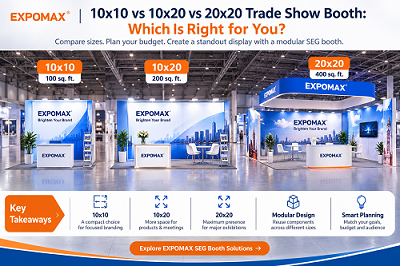
Choosing the right trade show booth size is an important decision for any exhibitor. A 10x10 booth may be sufficient for a small product display or a first-time exhibitor, while a 10x20 booth offers more room for demonstrations and visitor conversations. A 20x20 booth can support a larger brand experience with multiple display areas and more open visitor access.
However, booth size is only one part of the decision. Your exhibition goals, floor location, product dimensions, staffing plan, graphic requirements, transportation budget, and future event schedule all influence which solution makes sense.
This guide compares 10x10, 10x20, and 20x20 trade show booths, including their footprints, layout possibilities, cost considerations, staffing needs, and design requirements. It also explains how a modular SEG lightbox booth system can help exhibitors build a display that fits their current space and adapt it for future events.
Key Takeaways
10x10 trade show booth: A practical option for compact product displays, brand introductions, and exhibitors with limited space or budgets.
10x20 trade show booth: Offers twice the floor area of a 10x10 booth and more flexibility for product demonstrations, visitor conversations, and small meeting zones.
20x20 trade show booth: Provides four times the floor area of a 10x10 booth, making it suitable for larger product presentations, multi-zone layouts, and broader brand visibility.
Budget planning: Total exhibition costs depend on more than booth dimensions. Graphics, lighting, accessories, transportation, installation, and venue services also matter.
Long-term value: A compatible modular SEG booth system can help exhibitors reuse selected components and create different configurations for future shows.
1. Trade Show Booth Sizes at a Glance
The three booth sizes differ significantly in floor area and design flexibility. Before selecting a display system, compare the available space with the functions your booth needs to support.
Space and Footprint Comparison
| Booth Size | Approximate Area | Typical Configuration | Best For |
|---|---|---|---|
| 10x10 ft | 100 sq. ft. | Compact backwall, counter, small display area | First-time exhibitors, small teams, focused product displays |
| 10x20 ft | 200 sq. ft. | Extended backwall, product zone, meeting or demonstration area | Growing brands, multiple product categories, product demonstrations |
| 20x20 ft | 400 sq. ft. | Multi-sided display, island-style layout, multiple functional zones | Established brands, larger product collections, major exhibitions |
A 10x10 booth provides 100 square feet of floor space. A 10x20 booth doubles that area to 200 square feet, while a 20x20 booth provides 400 square feet. The additional space can improve visitor circulation and display capacity, but it also creates more design, logistics, and staffing requirements.
These dimensions describe the nominal booth footprint. The usable area and permitted display height may be affected by the venue's floor plan, neighboring booths, aisle access, fire regulations, and exhibitor manual.
Cost and Staffing Comparison
A larger booth generally requires a larger investment, but there is no universal price difference between the three sizes. A simple 20x20 display may cost less than a highly customized 10x20 booth with complex structures, premium graphics, and extensive accessories.
| Planning Factor | 10x10 Booth | 10x20 Booth | 20x20 Booth |
|---|---|---|---|
| Display investment | Generally lower | Generally moderate | Generally higher |
| Graphic requirements | One main visual message | Multiple visual sections | Multi-sided brand presentation |
| Accessories | Basic counter and shelves | Additional counters, shelves, or demo equipment | Multiple counters, meeting furniture, and display zones |
| Staffing plan | Small team | Small to medium team | Medium to larger team |
| Logistics | Fewer components in many configurations | More frame and graphic components | More extensive packing, transport, and setup planning |
Staffing should be planned around visitor volume, demonstration schedules, meeting appointments, and the number of people who need to be served at the same time. Booth dimensions alone do not determine the required number of staff.
When requesting a quotation, ask suppliers to separate the costs of the frame, SEG graphics, LED lighting, counters, accessories, packaging, shipping, and any installation services. This makes different booth proposals easier to compare.
2. 10x10 SEG Lightbox Booth: The Compact Starter
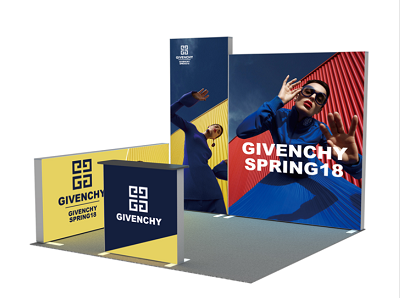
A 10x10 trade show booth is one of the most common formats for exhibitors who need a compact and professional brand presence. With 100 square feet of floor space, it can accommodate a backlit graphic wall, a reception counter, and a focused product display when the layout is planned carefully.
A 10x10 SEG lightbox booth is particularly useful when visual impact is more important than the number of separate display zones. LED illumination helps make the fabric graphic stand out, while the relatively compact footprint can simplify transportation and event preparation.
Best Layouts for a 10x10 Booth
1. Backwall + Reception Counter
This is a straightforward layout for exhibitors who want a clear brand message and an easy visitor check-in point. A backlit SEG wall serves as the main visual backdrop, while a counter provides space for brochures, product information, or lead collection.
2. L-Shaped Display
An L-shaped arrangement can create a more defined presentation area, especially when the booth has an appropriate corner or open-side configuration. One side can carry the primary brand graphic, while the other supports product information or a smaller display.
3. Open Front Display
For exhibitors who want to encourage walk-in traffic, a simple backwall with a compact counter can leave more of the front area open. This makes it easier for visitors to approach the booth and start a conversation.
Components and Display Options
A typical compact SEG display may include:
Aluminum or other specified modular frame components, depending on the selected product.
SEG fabric graphics with silicone edge detailing for a clean, frameless appearance.
LED lighting components for illuminated display areas.
A reception counter or podium for visitor interaction.
Optional shelves, monitor mounts, or other accessories when supported by the chosen configuration.
EXPOMAX offers 120mm SEG backlit booth configurations for exhibitors looking for modular exhibition displays. For example, buyers can review the following 10x10 booth solutions:
Cost and Staffing Considerations
A 10x10 booth is generally a cost-conscious starting point, but the final investment depends on the selected frame, lighting, graphic coverage, counter design, accessories, and shipping requirements.
A small team may be sufficient for a focused display with limited product demonstrations. However, if the booth includes scheduled meetings, live demonstrations, or several product categories, plan staffing around those activities rather than relying on the booth size alone.
Looking for a compact backlit display for your next exhibition?
Explore modular 10x10 configurations and choose a layout that fits your products and branding requirements.
Explore 10x10 SEG Booth Solutions3. 10x20 SEG Lightbox Booth: The Mid-Size Workhorse
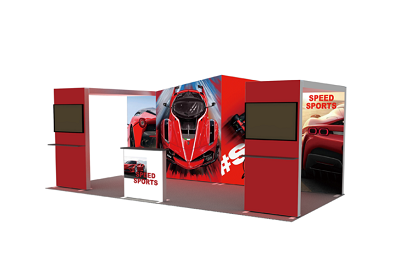
A 10x20 trade show booth provides 200 square feet of space, making it a practical choice for businesses that need more than a simple backwall. It offers additional room for product displays, demonstrations, visitor conversations, and small meeting areas.
Compared with a 10x10 booth, a 10x20 layout can support a more structured visitor journey. For example, visitors can first see the main brand message, then explore product displays, and finally move to a counter or meeting area for a detailed discussion.
Inline, Corner, and Peninsula Layouts
1. Inline Layout
An inline 10x20 booth is typically positioned along an aisle with neighboring booths on both sides. A long backwall can provide a continuous graphic area, while product displays and counters are arranged toward the front. The design should maintain an accessible entrance and avoid making the space feel crowded.
2. Corner Layout
A corner booth has access from two aisles, depending on the assigned floor plan. This creates an opportunity for two-sided visibility. The main brand message can face the primary aisle, while a secondary display or demonstration zone attracts visitors from the other direction.
3. Peninsula Layout
A peninsula booth is generally open on three sides and connected to neighboring exhibit space along one side. It can offer stronger visitor access and more flexible presentation options than a standard inline layout. The exact design and height restrictions should be confirmed with the event organizer.
Not every 10x20 space is available in all three configurations. Always check the assigned booth location and the organizer's floor plan before finalizing the structure.
Product Display and Meeting Zones
The additional space in a 10x20 booth can be divided into several functional areas:
Branding zone: A large SEG backlit graphic or main display wall to communicate the company's identity and key message.
Product zone: Shelves, product stands, or demonstration equipment to present important products.
Reception zone: A counter or podium for greeting visitors and collecting inquiries.
Meeting zone: A small table and chairs for product discussions or business conversations, if the floor plan allows.
The goal is to create a logical flow without filling every available square foot. Visitors should be able to enter, view products, and speak with staff without blocking other display areas.
Cost and Staffing Considerations
A 10x20 booth usually requires more frame sections, fabric graphics, lighting, and accessories than a basic 10x10 setup. It may also involve additional transportation volume and more setup work.
Staffing requirements depend on how the space is used. A booth focused on product displays may need fewer people than one running continuous demonstrations and private meetings. Create a staffing schedule for peak visitor periods, scheduled appointments, and setup or teardown activities.
EXPOMAX's 120mm SEG booth range includes larger modular configurations. Buyers can review the following 20x10 example as a reference for a longer display footprint:
4. 20x20 SEG Lightbox Booth: The Island Experience
A 20x20 trade show booth provides 400 square feet of floor space. It is suitable for exhibitors who need a larger brand environment, multiple product presentation areas, or a more immersive visitor experience.
This size can accommodate several display walls, product demonstration areas, reception counters, and meeting spaces. However, the design must be planned around the actual booth location and the number of open sides.
Island and Peninsula Layouts
A 20x20 booth is often used for an island-style exhibition space, where visitors can approach from multiple aisles. This arrangement creates opportunities for multi-sided branding and several entry points.
A peninsula-style layout may also be used when the assigned space is open on three sides and connected to other exhibit space along one side. The permitted structure, wall placement, and display height can differ from an island booth.
Before designing a large booth, confirm whether the space is inline, corner, peninsula, or island. This affects how graphics, walls, counters, and visitor routes should be arranged.
Multi-Sided Branding and Functional Zones
A well-planned 20x20 booth can be divided into distinct areas:
Main branding area: A prominent backlit display or central graphic structure that communicates the brand's primary message.
Product demonstration area: Space for visitors to inspect products, watch demonstrations, or interact with equipment.
Secondary product displays: Additional walls or display structures for different product categories.
Reception and lead collection: Counters positioned where staff can welcome visitors without obstructing traffic.
Meeting area: A designated space for longer discussions, subject to the available footprint and event requirements.
For larger spaces, visual consistency is especially important. Graphics on different sides should communicate a coordinated brand message rather than competing for attention. Use the most visible surfaces for the company name, core product category, and primary value proposition.
Cost and Staffing Considerations
A 20x20 booth generally requires a larger overall budget because of its greater display area and more complex design. Costs may include additional frame structures, graphics, LED components, counters, furniture, shipping cases, transportation, installation, and venue-related services.
More floor space can also create additional staffing needs, especially when the booth has multiple demonstration stations or meeting areas. Assign clear roles to team members, such as visitor reception, product demonstrations, technical support, and business discussions.
A large booth should not simply be filled with more displays. Every area should have a clear purpose, and the layout should provide comfortable visitor circulation.
5. Design Considerations for Every SEG Lightbox Booth
Regardless of whether you choose a 10x10, 10x20, or 20x20 footprint, good display design helps visitors understand your brand and products quickly. An SEG lightbox booth combines a frame structure, fabric graphics, and lighting components to create a clean illuminated display.
Graphics and Message Hierarchy
Trade show visitors often make quick decisions about which booths to approach. Your main graphic should communicate the most important information at a glance.
A practical message hierarchy includes:
Brand name and logo: Make the company easy to identify from the aisle.
Main product or service: Tell visitors what your business offers.
Key value proposition: Highlight a meaningful benefit, application, or area of expertise.
Supporting information: Use concise product details, images, or technical highlights.
Call to action: Encourage visitors to request a quote, scan a code, or speak with your team.
Avoid placing too much text on a large fabric graphic. A clear headline, strong product image, and concise supporting message are usually easier to understand from a distance.
LED Lighting and Backlit Displays
LED illumination is an important part of a backlit SEG display. It helps distribute light behind the fabric graphic, making images and brand colors more visible in the exhibition environment.
When comparing lightbox systems, consider:
Lighting distribution across the graphic surface.
Brightness and visual consistency for the intended exhibition environment.
Power supply and electrical requirements.
Access to electrical components for inspection or maintenance.
Compatibility between the frame, lighting system, and fabric graphic.
Ask the supplier to provide the lighting specifications and power requirements for the exact configuration you plan to purchase. Do not assume that all lightbox frames use the same LED arrangement or electrical components.
Height, Storage, and Structural Requirements
Booth height restrictions vary by exhibition organizer, venue, booth type, and location. Some events apply different rules to inline, corner, peninsula, and island spaces. Always review the current exhibitor manual before confirming the display height.
Storage is another important consideration. A counter with internal storage, a designated cabinet, or a separate storage solution can help keep brochures, personal items, and demonstration materials organized.
For larger or more complex displays, confirm the frame dimensions, connection method, structural requirements, electrical arrangement, and installation instructions. The supplier should provide configuration-specific information rather than relying on general product descriptions.
6. How to Match Booth Size to Your Exhibition Goals
The best booth size is the one that supports your business objectives while fitting the event's floor plan and budget. Consider the following factors before selecting a display.
Show Type and Booth Placement
A small regional exhibition may require a different presentation strategy from a major international trade show. Consider the expected visitor volume, the event's industry focus, the location of your booth, and the number of competing exhibitors.
Booth placement is particularly important. A corner or island space may provide more visitor access than an inline space of the same nominal dimensions. Your graphic visibility and entrance arrangement should reflect the actual floor plan.
Industry and Product Requirements
Different industries have different display needs:
Technology and electronics: May need screens, interactive demonstrations, and dedicated areas for product explanations.
Manufacturing and industrial equipment: May require product samples, technical displays, and sufficient clearance around demonstration units.
Consumer goods: May benefit from organized shelving, product comparison areas, and prominent brand graphics.
Healthcare and medical products: May need clear product presentation, technical information, and space for professional discussions.
Building materials and large products: May require additional floor space, stronger display planning, and careful transport arrangements.
If your products are large, heavy, or require live operation, confirm the floor loading, access, power, and safety requirements with the event organizer and your display supplier.
Business Goals
Your booth should be designed around what you want visitors to do:
Brand awareness: Prioritize a clear visual identity and strong aisle-facing graphics.
Lead generation: Make reception and visitor engagement easy.
Product education: Provide enough space for product information and demonstrations.
Business meetings: Include a suitable discussion area with enough privacy for the event environment.
Product launches: Plan a focused presentation area with appropriate lighting and visitor access.
If your main objective is brand visibility, a well-designed 10x10 backlit display may be sufficient. If your goal is to demonstrate several products and hold business meetings, a 10x20 or 20x20 configuration may be more appropriate.
7. When Should You Upgrade or Downsize Your Trade Show Booth?
Booth requirements can change as a company grows, enters new markets, or adjusts its exhibition strategy. Reviewing the performance of previous events can help determine whether your next display should be larger or more compact.
When to Move Up to a Larger Booth
Consider upgrading from a 10x10 to a 10x20, or from a 10x20 to a 20x20, when:
Your current display cannot accommodate all the products you want to present.
Visitors frequently gather around one area and block access to other displays.
Your team needs separate spaces for demonstrations and business meetings.
You are launching new product lines or entering a larger exhibition market.
Your business has a stronger exhibition budget and a clear plan for using the additional space.
Before upgrading, review the results of previous shows. Look at visitor engagement, qualified leads, meeting activity, and the actual use of your existing booth space. A larger footprint is most valuable when it supports a defined business objective.
When to Scale Down
A smaller booth may be a better choice when:
Your product range has become more focused.
Previous booths had unused display or meeting areas.
Transportation, storage, or installation costs need to be reduced.
You are attending more regional events with smaller visitor volumes.
Your exhibition strategy prioritizes targeted meetings over broad product presentations.
Scaling down does not necessarily mean reducing brand impact. A compact SEG lightbox display with well-planned graphics can still create a professional and visually consistent presentation.
8. How to Choose a Modular SEG Booth System for Different Sizes
For exhibitors who attend multiple trade shows, a reusable modular trade show booth can be a practical alternative to purchasing a completely different display for every event.
A modular SEG booth system uses compatible frame components and graphic panels to create different display arrangements. Depending on the product design, selected components may be reused in different booth configurations, helping businesses plan for future exhibitions.
Frame Profiles and Modules
Frame profile dimensions, materials, connection methods, and structural design affect the appearance and application of an SEG display. EXPOMAX's SEGQUICK range includes 60mm, 65mm, 80mm, and 120mm profile options.
The 120mm SEG booth range includes A, B, C, D, and G module types. These modules are used in different booth configurations, including selected 10x10 and 20x10 solutions. The exact combination depends on the model and configuration.
When selecting a modular system, confirm the following with the supplier:
Which frame profiles and modules are included in the quotation?
Which components can be reused in other booth sizes?
Are additional connectors, support parts, or accessories required for a new layout?
Can the graphics be replaced independently of the frame?
Are there restrictions on height, span, or structural configuration?
Do not assume that every module or profile size is interchangeable. Compatibility should be confirmed for the specific product series and proposed layout.
Reusable Graphics and Replacement Panels
SEG fabric graphics are designed to fit into compatible frame channels using silicone edge detailing. This creates a clean display surface and allows graphics to be replaced when branding or product information changes.
For businesses attending multiple exhibitions, reusable frames and replaceable graphics can help separate the long-term display investment from event-specific branding costs. However, graphic dimensions and frame compatibility must be checked before ordering replacement fabric.
Custom Configurations for Different Exhibition Spaces
A modular display should be selected based on both current and future exhibition requirements. For example, a company may begin with a compact backwall and later need a longer product display or a more extensive presentation area.
Before purchasing, provide the supplier with your current booth dimensions, preferred layout, product display requirements, and possible future booth sizes. The supplier can then confirm whether a proposed system can support the planned configurations.
EXPOMAX 120mm SEG Booth Solutions
EXPOMAX provides 120mm SEG backlit booth solutions for exhibitors looking for modular display configurations. The product range includes different A, B, C, D, and G modules, which are combined according to specific booth designs.
Selected configurations are available for compact and larger exhibition footprints. Buyers can review the following product categories and examples to understand the available design options:
120mm SEG Booth Solution – Explore the 120mm modular booth range.
SEG Booth Solution – Browse SEG exhibition booth configurations.
120mm SEG A Series – Review an example of the A Series display.
120mm SEG C Series – Explore another modular display configuration.
When requesting a custom solution, provide the required booth size, floor plan, open-side arrangement, graphic requirements, lighting preferences, product dimensions, and any accessories you need. This allows the supplier to recommend a configuration based on the actual exhibition requirements.
Planning a modular booth for multiple exhibitions?
Explore EXPOMAX SEG booth systems and discuss frame combinations, graphic options, and custom configurations.
Explore Modular SEG Booth Systems9. A Simple Trade Show Booth Decision Framework
If you are still unsure which booth size to choose, use the following questions to narrow down your options.
How much floor space is available?
A 10x10 booth offers 100 sq. ft., a 10x20 booth offers 200 sq. ft., and a 20x20 booth offers 400 sq. ft. Start with the dimensions confirmed by the event organizer.
How many products need to be displayed?
A focused product presentation may fit a 10x10 space. Multiple product categories or larger demonstration equipment may require a 10x20 or 20x20 layout.
Do you need a dedicated meeting area?
If business discussions are a major objective, consider whether the booth has enough room for seating without restricting visitor circulation.
What is your total exhibition budget?
Include the display structure, graphics, lighting, accessories, packaging, transportation, installation, and venue-related expenses.
Will you reuse the display at future events?
If you attend different exhibitions with different booth dimensions, ask about compatible modular components and replacement graphics before making a purchase.
As a general starting point, choose a 10x10 booth for a focused and compact presentation, a 10x20 booth for additional product and interaction space, and a 20x20 booth for a larger multi-zone exhibition experience. Your final choice should always reflect the venue rules, actual floor plan, and business objectives.
10. Frequently Asked Questions About Trade Show Booth Sizes
1. Is a 10x10 trade show booth big enough for a small business?
Yes. A 10x10 booth provides 100 square feet of space and can accommodate a backwall, reception counter, and focused product display. It is a practical option for small businesses, first-time exhibitors, and companies with a limited number of products to present.
2. What is the difference between a 10x10 and a 10x20 trade show booth?
A 10x10 booth provides 100 square feet, while a 10x20 booth provides 200 square feet. The larger footprint offers more room for product displays, demonstrations, visitor interaction, and meeting areas.
3. Is a 20x20 booth worth the investment?
A 20x20 booth can be worthwhile for businesses that need multiple display zones, larger product presentations, or a prominent presence at major exhibitions. Its value depends on visitor engagement, lead generation goals, and how effectively the additional space is used.
4. How much does a 10x10, 10x20, or 20x20 trade show booth cost?
Costs vary according to frame materials, booth design, SEG graphics, LED lighting, counters, accessories, packaging, transportation, installation, and venue services. Request an itemized quotation based on your exact booth configuration instead of comparing prices by floor area alone.
5. How many people are needed to staff a trade show booth?
Staffing depends on expected visitor traffic, product demonstrations, scheduled meetings, and the number of visitor interactions happening simultaneously. A compact display may be managed by a small team, while a larger multi-zone booth may require additional staff with clearly assigned roles.
6. Can I reuse a modular SEG booth for different booth sizes?
Selected modular SEG components can be reused in different configurations when they are designed to be compatible. However, not every frame, connector, or graphic panel is interchangeable. Ask the supplier to confirm compatibility for each planned booth layout before purchasing.
7. What is the advantage of an SEG lightbox booth?
An SEG lightbox booth combines fabric graphics with a frame system and LED illumination. It provides a backlit visual display, a clean graphic finish, and the option to replace compatible fabric graphics when branding or product information changes.
8. What should I provide when requesting a custom trade show booth quotation?
Provide your booth dimensions, exhibition floor plan, open-side configuration, product display requirements, graphic preferences, lighting needs, accessory list, event location, and expected delivery date. Reference photos or a booth design can also help the supplier prepare a more accurate proposal.
11. Conclusion: Choose a Booth That Supports Your Long-Term Exhibition Strategy
Choosing between a 10x10, 10x20, and 20x20 trade show booth is not simply a matter of selecting the largest available space. The right choice depends on your products, visitor engagement goals, booth location, staffing plan, and total exhibition budget.
A 10x10 booth is a practical starting point for focused brand presentations. A 10x20 booth offers more flexibility for product demonstrations and business conversations. A 20x20 booth creates opportunities for multi-sided branding and a more comprehensive visitor experience.
For exhibitors attending multiple events, a modular SEG booth system is worth considering. By selecting compatible frame components, reusable structures, and replaceable fabric graphics, businesses can plan their display investment around both current and future exhibition needs.
EXPOMAX offers SEG lightbox and modular booth solutions, including the 120mm A, B, C, D, and G module range. Share your booth dimensions, exhibition floor plan, product requirements, and preferred configuration to discuss a suitable display solution.
Need a custom SEG trade show booth for your next exhibition?
Tell EXPOMAX your booth size, display requirements, target event, and preferred configuration. The team can help you explore a suitable modular exhibition display solution.
Get a Custom Trade Show Booth Quote




View More(Total0)Comment lists