



 marketing@expomax.com.cn


Which Brand Is the Best for RGB Lightbox? A Buyer's Guide
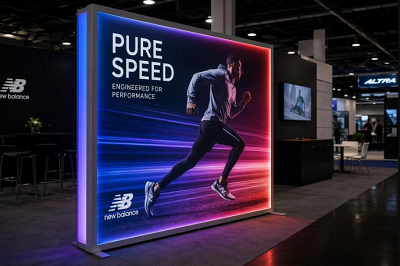
Distributors and resellers in North America and Europe are seeing more end-customers ask for RGB lightboxes — displays where the frame itself cycles through dynamic colors rather than just backlighting a graphic in white. The demand is real, but the supplier landscape is fragmented. Some factories ship edge-lit units; others call the same product a "backlit flash frame." Certifications vary. Lead times vary. And the difference between a manufacturer and a trading company can be hard to spot from a catalog PDF.
This guide is built to help exhibition display distributors evaluate suppliers, understand the RGB illuminated lightbox specifications that matter, and identify which brands are worth serious consideration.
What Is an RGB Lightbox?
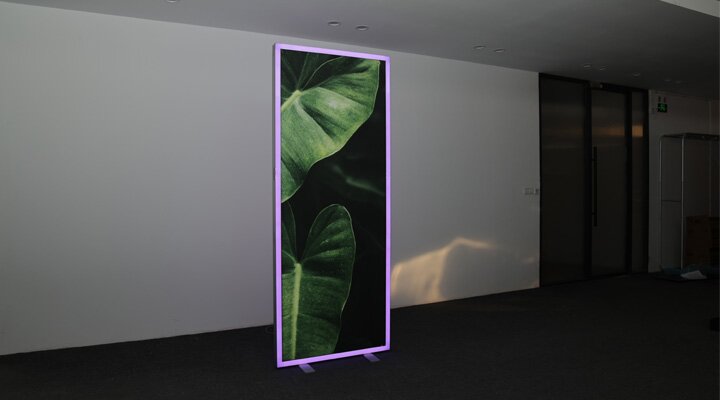
An RGB lightbox is an illuminated display system where LEDs — combining red, green, and blue light channels — produce millions of color variations instead of fixed white output. The LED modules are installed inside an aluminum frame and can be controlled by remote, DMX, or Wi-Fi to produce static solid colors, smooth gradients, or rapid flash effects.
The graphic panel is typically a SEG (Silicone Edge Graphic) fabric that inserts into a channel in the frame. When the RGB LEDs fire, the graphic is illuminated from behind or from the edge, turning a standard display into a dynamic visual statement on a show floor or in a retail environment.
For distributors, RGB lightboxes represent a premium SKU that commands higher margin than standard white-LED units — provided the supplier can deliver consistent quality, compliant electrical components, and replacement graphics that fit cleanly batch after batch.
What Should You Look for in an RGB Lightbox Brand?
Before evaluating individual brands, it helps to agree on what actually separates a good RGB illuminated lightbox supplier from a mediocre one.
RGB LED Lighting Performance
The performance of the LED system is the core variable. Key parameters to verify from any supplier:
Voltage: Most trade show–grade units run at 12V or 24V DC. Confirm compatibility with North American and European power infrastructure.
LED lifespan: Industry-grade LEDs should carry a 50,000-hour rating. Anything shorter raises replacement cost concerns for distributors reselling into multi-year event programs.
Color control: Quality systems offer at minimum seven solid colors, adjustable saturation, dynamic gradient modes, and variable speed. A remote that controls multiple synchronized units is important for large-booth applications.
Light distribution: Uniform illumination without hot spots — especially critical for backlit lightboxes where internal ladder LEDs hit a graphic directly. Ask the supplier for photometric reports.
Certifications: For the North American market, verify UL/ETL listing for the driver and power supply. For European clients, CE and RoHS documentation matched to the specific SKU that ships is required. A certificate that covers a different model is useless.
RGB LED Frame Construction
The frame profile determines shipping cost, setup time, and how many shows the unit survives before showing wear.
Anodized aluminum is the industry standard for exhibition-grade systems. It is lightweight, corrosion-resistant, and structurally stable under the repeated assembly and teardown cycles typical of trade show use.
Profile depth affects visual weight and packing volume. An 80mm profile is a common standard for full-sized RGB frames — deep enough to house LED modules and integrated power supply, slim enough for reasonable drayage.
Toolless assembly is table stakes for the trade show market. If a booth requires a screwdriver, it adds labor cost and failure risk on-site. Look for cam-lock or push-to-lock systems that can be set up by one person without specialized tools.
Packing and transit: Frames sold into the event market will fly, check into cargo holds, and sit on pallets at drayage desks. An EVA hard case with molded inserts protects profiles and LED modules meaningfully better than a nylon bag.
Edge Lit LED Frame vs Backlit RGB Lightbox
These are two distinct product architectures, and both carry the RGB label:
Edge-lit RGB frames place LED modules along the inner edges of the aluminum profile. Light travels through an optical guide plate and spreads across the graphic surface. The result is a slim-profile unit with even illumination, well-suited for retail displays, backdrops, and applications where frame depth is a constraint.
Backlit RGB lightboxes place LEDs across the rear of the frame, shining directly through the graphic fabric. Combined with RGB side columns, this dual-system approach delivers significantly higher brightness — useful in high-ambient-light environments like convention halls and shopping malls with strong ceiling lighting.
For distributors, understanding this distinction matters because the correct choice depends entirely on the end-customer's use case. Neither architecture is universally superior; the question is which one fits the environment.
Does the Best RGB Lightbox Need SEG Fabric?
Yes — in any professional RGB lightbox system designed for repeated use, SEG (Silicone Edge Graphic) fabric is the appropriate graphic format. The reason is practical, not aesthetic.
SEG fabric is printed on a translucent polyester base engineered to diffuse LED light evenly and hold deep color saturation when backlit. The silicone bead sewn around the perimeter locks into a groove in the aluminum frame, pulling the graphic taut without mechanical fasteners. The result is a wrinkle-free, borderless surface with no visible edges or hardware.
From a distribution standpoint, the reusable frame and replaceable graphic model is commercially important: the same aluminum system can serve multiple campaigns, reducing the total lifetime cost per impression for the end-customer and creating recurring graphic print revenue for the distributor. A supplier who sells an RGB lightbox with a proprietary graphic attachment that doesn't accept standard SEG fabrics from local print partners creates friction in your supply chain.
RGB Lightbox Brands: What Makes a Supplier Different?
The table below reflects the main differentiators distributors should evaluate when comparing RGB lightbox suppliers:
Criterion | What to verify |
|---|---|
Manufacturing status | Direct factory or trading company? Request facility photos and a video call showing the production line. |
Profile spec | Frame depth, material (anodized aluminum vs extrusion with powder coat), and profile tolerances |
Toolless assembly | Push-to-lock, cam-lock, or tool-required? Ask for a setup video. |
LED lifespan | 50,000-hour LED with documented spec sheet |
Control options | Remote-only, DMX, Wi-Fi — and whether one remote can sync multiple frames |
Certifications | UL/ETL (North America), CE/RoHS (Europe), matched to the shipped SKU |
SEG compatibility | Standard groove width — does it accept graphics from local print providers? |
Packing quality | EVA hard case with molded inserts vs. soft bag |
OEM/ODM capability | Custom dimensions, private label, branded packaging |
Lead time reliability | Average production weeks and track record on deadlines |
Support materials | English-language installation video, spec sheets, print-ready templates |
Pro Tip: Request two samples from different suppliers and test them side by side under real show conditions before committing to volume. Compare color consistency, brightness at 3 meters, heat output after two hours, and remote reliability.
Why Consider EXPOMAX for RGB Lightbox Solutions?
EXPOMAX is a direct manufacturer based in China with over 20 years of experience in tension fabric and portable exhibition display systems. Operating from a 6,000-square-meter production facility, the company serves distributors across North America and Europe and holds multiple national patents covering its display designs.
Their RGB product range is organized into three distinct categories.
RGB Frame System
The RGB Frame System is EXPOMAX's complete modular RGB display line. It combines advanced LED color-changing technology with an 80mm anodized aluminum profile and a standard SEG graphic attachment. Unlike some Chinese OEMs that rebrand imported components, EXPOMAX manufactures its own aluminum extrusions and integrates the LED modules and power supply internally — the driver sits inside the profile, which eliminates exposed external cables and transformers.
RGB Flash Frame
The RGB Flash Frame EM-22AA is EXPOMAX's edge-lit RGB display — a slim, double-sided unit engineered for high-traffic foot traffic areas where both faces of the display are visible.
Key specifications:
80mm high-grade anodized aluminum profile
Dual-sided RGB + tunable white LED columns (remote-controlled, 7 solid colors, gradient and flash modes)
Toolless "Push-to-Lock" assembly — no hardware required
Standard SEG graphic channel on both faces
Ships with a heavy-duty EVA wheeled hard case as standard
23% lighter than comparable competitive frames
Available in widths from 39.37" × 39.37" to 39.37" × 98.43"
The RGB columns on both edges allow synchronized color control across multiple units, which matters for distributors supplying booth setups where several frames need to match in real time.
RGB Flash Lightbox
The RGB LED Edge Frame Lightbox EM-22AB adds a high-intensity internal LED backlit panel to the same 80mm aluminum frame as the EM-22AA. This dual-lighting system — RGB side columns plus ladder LEDs behind the graphic — is built for environments where ambient light is high and a single-source edge-lit unit would look washed out.
EXPOMAX RGB LED Frame vs Conventional Lightbox
The table below compares the EXPOMAX RGB frame system against a standard white-LED SEG lightbox on the criteria that matter to distributors:
Feature | EXPOMAX RGB LED Frame | Conventional SEG Lightbox |
|---|---|---|
Lighting effect | Dynamic RGB colors, 7 solid hues, gradient and flash modes | Fixed white illumination only |
Frame design | Slim 80mm anodized aluminum, integrated power supply | Typically thicker with external driver |
Graphic replacement | Tool-free SEG swap in minutes | Varies; some require partial frame disassembly |
Energy consumption | Lower per lumen (LED efficiency) | Higher on older fluorescent-backlit units |
Installation | Single-person toolless setup | Often requires two people and tools |
Visual impact at show | High — dynamic color draws attention from a distance | Standard — effective but not differentiated |
Price tier | Premium | Mid-range to budget |
Transit protection | EVA hard case standard | Often a nylon bag |
The value case for distributors is straightforward: RGB units command a higher per-unit margin, create a visible upgrade path for customers currently running standard lightboxes, and open new sales channels (brand activations, product launches, retail flagship installations) where static white illumination is no longer sufficient.
EXPOMAX EM-22AA vs EM-22AB RGB Lightbox
Both models share the same 80mm anodized aluminum frame, the same toolless push-to-lock assembly, the same EVA wheeled hard case, and the same size options. The difference is the lighting architecture:
Feature | EM-22AA (RGB Flash Frame) | EM-22AB (RGB Flash Lightbox) |
|---|---|---|
Lighting type | Edge-lit (RGB columns only) | Dual: RGB columns + internal backlit LEDs |
Best environment | Indoor retail, dim trade show halls, double-sided backdrops | High-ambient-light environments, premium booth builds |
Graphic illumination | Light distributed via optical guide plate from edges | Edge RGB + direct internal ladder LED backlighting |
Brightness level | Standard | Significantly higher |
Recommended fabric | Standard backlit SEG | High-density backlit SEG (to prevent hot spots) |
Weight (39.37" × 78.74") | 46.30 lbs | 46.30 lbs |
The decision between the two comes down to environment and budget. For distributors building a catalog, carrying both SKUs lets you offer an entry-level RGB option (EM-22AA) and a premium solution (EM-22AB) without managing entirely different frame systems — replacement graphics are interchangeable.
What Applications Are RGB Lightboxes Best For?
Trade Shows
At trade shows, a distributor's end-customers are competing for attention against hundreds of neighboring booths. Dynamic RGB edge lighting — especially when synchronized across multiple frames — creates a visible perimeter that draws foot traffic from across the hall. The toolless setup and wheeled EVA case matter here because drayage is expensive and labor time on-site is finite.
Retail Stores
Retail window displays and interior feature walls benefit from the ability to change lighting color by season, campaign, or promotion without replacing the graphic or the frame. A fashion retailer can shift from warm amber during the holiday season to cool blue for a summer activation using the same hardware.
Brand Showrooms
In corporate showrooms and customer experience centers, static displays often look outdated within 18 months. RGB lightbox systems allow facilities teams to update both the graphic and the ambiance by adjusting the lighting color — extending the visual life of the installation.
Events
Product launches, pop-ups, and marketing activations frequently specify dynamic lighting. RGB frames are a cost-effective alternative to full LED video wall installations when the goal is branded atmosphere rather than video content.
Exhibition Distributors
For distributors specifically, RGB systems create an upsell opportunity within an existing customer base. Customers who already own standard SEG lightbox frames are natural targets for an RGB upgrade — the graphic format and frame concept are familiar; only the lighting system changes.
Custom RGB Lightbox Solutions
Custom RGB Lightbox Frame
EXPOMAX offers custom frame sizes beyond the standard widths listed in their catalog. If your end-customer needs a 118-inch-wide format — for a 10 × 10 or 10 × 20 booth backdrop — custom extrusions are available with the same 80mm aluminum profile and LED system.
Custom RGB LED Frame
For distributors who need a private-label product, EXPOMAX provides OEM configuration at the frame level: custom profile dimensions, modified LED density, specific color-temperature presets, and client-branded packaging.
OEM/ODM RGB LED Lighting System
Full OEM and ODM services include custom product dimensions, custom frame designs, customized lighting effects optimized for specific venue types, and bulk production support with quality inspection at the factory. Reseller-ready documentation — installation videos, English-language spec sheets, print-ready graphic templates — is available as part of the partnership package.
How to Choose the Right RGB Lightbox Brand?
Use these eight questions as your supplier qualification framework before placing a first order:
Is the supplier a direct manufacturer or a trading company? Request a factory walkthrough video or a scheduled video call showing the production line. The distinction directly affects your ability to resolve quality disputes and negotiate on specification changes.
What certifications cover the electrical components? Ask for UL/ETL (North America) or CE/RoHS (Europe) documents and verify they match the exact SKU that will ship, not a related model.
What is the tested LED lifespan, and can the supplier provide the spec sheet? 50,000 hours is the minimum standard for commercial-grade trade show use.
Does the frame accept standard SEG fabrics from local print partners? A proprietary graphic attachment that locks your customers into the supplier's own printing service reduces your flexibility and margin.
Can one remote control multiple synchronized units? For booth builds with three or more frames, synchronized color control is a practical requirement, not a luxury.
What is the standard packing, and what protection does it provide for air freight and drayage? An EVA hard case with molded inserts is a meaningful specification difference from a soft bag.
What is the lead time, and what is the supplier's track record on show deadlines? Ask for references from other North American or European distributors if possible.
What reseller support materials are provided? English-language installation guides, printable spec sheets, graphic templates, and branded catalogs allow you to hand the product off to end-customers with confidence.
So, Which Brand Is the Best for RGB Lightbox?
There is no single answer that fits every distributor's situation, but the evaluation criteria are consistent: direct manufacturing capability, verified electrical certifications, documented LED performance, standard SEG compatibility, toolless assembly, transit-ready packing, and genuine OEM support.
Among the suppliers currently active in the North American and European exhibition market, EXPOMAX stands out as a manufacturer — not a trading company — with a documented RGB product line, published technical specifications, OEM/ODM capability, and over two decades of production experience. For distributors who need a reliable upstream partner that can support private-label programs and custom sizes alongside a standard catalog, it is a credible starting point.
That said, the most important step is not reading a guide — it is ordering samples, testing them under real conditions, and verifying the supplier's response time and quality consistency before scaling an order.
Frequently Asked Questions
What does RGB mean in an RGB lightbox?
RGB stands for Red, Green, and Blue. By combining these three primary light colors at different intensities, an RGB LED system can produce millions of color variations — allowing the frame to display any color or cycle through dynamic lighting effects.
What is the difference between an edge-lit and a backlit RGB lightbox?
In an edge-lit RGB lightbox, LEDs run along the inner edges of the frame and spread light across the graphic through an optical guide plate. In a backlit RGB lightbox, LEDs are positioned behind the graphic fabric and illuminate it directly. Backlit systems are typically brighter; edge-lit systems are slimmer and lighter.
Why is SEG fabric important for RGB lightboxes?
SEG (Silicone Edge Graphic) fabric is designed for even light diffusion and high color saturation when backlit. The silicone bead locks into the aluminum frame groove, creating a taut, wrinkle-free surface without visible hardware. It also allows quick graphic replacement without removing the frame from the wall or stand.
How long do RGB LED lightbox components typically last?
Commercial-grade RGB LED systems are rated for approximately 50,000 hours of operation. At eight hours of use per day, that represents over 17 years of operational life — making the LED system effectively a one-time infrastructure cost, with graphics as the recurring consumable.
What control options are available for RGB lightboxes?
Common control methods include wireless remote (for simple on-site color adjustment), DMX (for professional event productions with precise lighting cue control), and Wi-Fi (for mobile device control and cloud-based scheduling). Higher-end systems allow a single remote to synchronize multiple frames simultaneously.
What certifications should I require from an RGB lightbox supplier? For North America: UL or ETL listing for the LED driver and power supply. For Europe: CE marking and RoHS compliance. Request documentation that matches the exact SKU being shipped — not a certificate for a related model.
Can RGB lightbox frames be reused with different graphics?
Yes. The aluminum frame and LED system are designed as permanent infrastructure. The SEG graphic is the consumable — it can be replaced in minutes without tools by pulling the silicone edge from the groove and inserting a new graphic. This is the core of the recurring revenue model for resellers.
What is the difference between the EM-22AA and EM-22AB?
Both are EXPOMAX RGB lightbox models built on the same 80mm anodized aluminum frame. The EM-22AA is an edge-lit unit with dual-sided RGB LED columns and no internal backlighting. The EM-22AB adds high-intensity internal LED backlighting behind the graphic, making it significantly brighter and better suited to high-ambient-light environments.
What sizes are available for RGB lightbox frames?
Standard sizes vary by supplier. EXPOMAX offers sizes ranging from 39.37" × 39.37" to 39.37" × 98.43" in their catalog, with custom frame dimensions available for larger booth configurations or non-standard project requirements.
What should I ask for when requesting an RGB lightbox sample?
Request the complete assembled unit with all components: frame, LED system, power supply, remote controller, and a fabric graphic. Test color consistency across the full graphic surface, brightness at 3 meters, heat output after two hours of continuous use, remote range and sync capability, and assembly time for one person starting from an unpacked case.
Get a Quote for Your RGB Lightbox Project
If you are sourcing RGB lightboxes for trade show distribution, retail rollouts, or private-label catalog expansion, the practical next step is to request a sample and review the technical documentation before committing to volume.
Contact EXPOMAX's team to request product samples, OEM pricing, certification documents, and lead-time information for your specific market requirements.






View More(Total0)Comment lists